BYD is starting to use its signature blade battery in its energy storage systems, marking another major use of the battery technology in the company's business after passenger cars and electric buses.
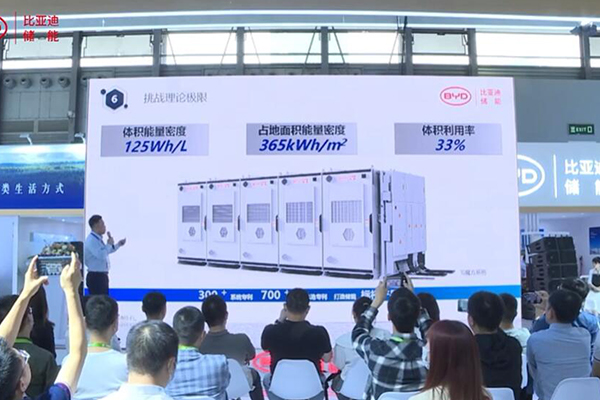
BYD launched its first energy storage system based on blade batteries, the BYD MC Cube, at a solar-related trade show. The energy storage system is equipped with blade battery cells that have passed pinprick tests and adopts a technology called CTS (cell to system).
These blade batteries use a module-less, pack-less design and are integrated directly into the system, reducing the number of components by about 36 percent. This approach improves space utilization by about 98 percent, allowing for a structural strength improvement of about 30 percent.
In March 2020, BYD officially unveiled its blade battery based on lithium iron phosphate chemistry, and in July 2020 it launched its flagship sedan Han, the first to carry the battery. To date, the new energy vehicle giant's entire lineup of passenger cars uses the battery.
On September 19, 2022, BYD brought the battery technology to electric buses by debuting what it called the eBus Blade Platform, a bus chassis technology platform that uses the blade battery, at the IAA Transportation event in Hannover, Germany.
BYD MC Cube is a new generation energy storage system with ultra-high capacity density, ultra-safety, ultra-long life and ultra-low cost built by BYD to gain the No. 1 share of the global energy storage market.
BYD had already been developing four models of that energy storage system in February 2022, and they would all begin mass production in March 2023. When assembled into 20-foot containers, the energy storage system can have a capacity of 5.36 MWh per unit.