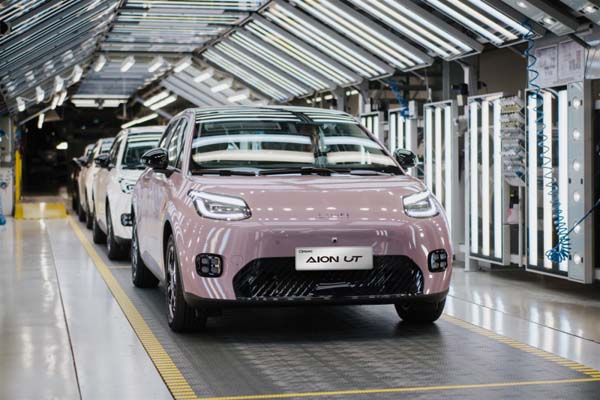
GAC has started mass production of its AION UT electric vehicle at Magna International’s manufacturing facility in Austria, marking the company’s second locally produced model in Europe after the AION V.
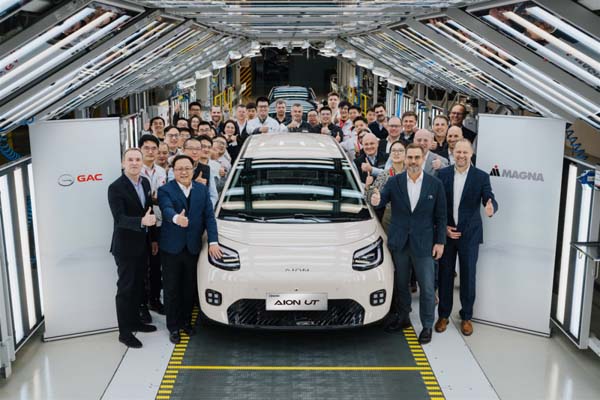 The milestone underscores deepening cooperation between GAC and Magna, as the Chinese automaker accelerates its localization strategy in the European market. By leveraging Magna’s established manufacturing expertise alongside its own design and R&D capabilities, GAC Group has implemented a “designed in Europe, built in Europe” approach for the AION UT—highlighting a growing model of industrial collaboration between China and Europe.
The AION UT is scheduled to be introduced across multiple European markets starting in April 2026.
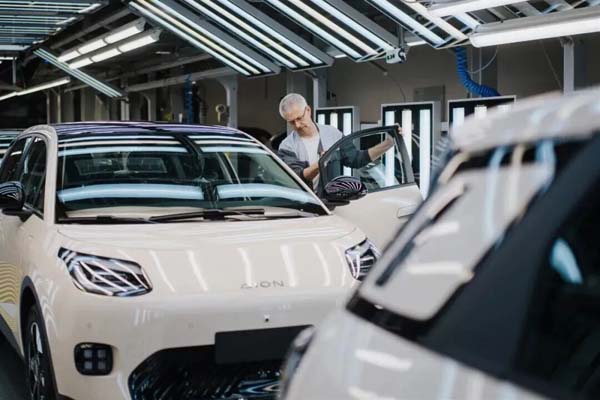 Developed by GAC’s Milan-based European design team, the model has been tailored specifically to meet the expectations of European consumers. Its design, functionality and driving experience have all been optimized for local preferences.
Positioned primarily for urban mobility, the AION UT features a compact footprint that maximizes interior space efficiency while maintaining comfort for both drivers and passengers. The vehicle’s packaging reflects GAC’s focus on practicality and its understanding of European city driving conditions, while also demonstrating its capability to support localized, scalable production.
 Europe remains a central pillar of GAC’s global expansion strategy. The company continues to advance its “in Europe, for Europe” approach through strengthened partnerships, localized operations and ongoing investment in the regional mobility ecosystem.
The start of AION UT production in Austria marks another step in GAC’s efforts to establish a sustainable and localized presence in Europe, as it moves closer to becoming a globally competitive automotive brand.
Looking ahead, GAC said it will continue to collaborate with international partners to deepen its footprint in Europe. By delivering products and services aligned with local demand, the company aims to play a larger role in the region’s new energy vehicle ecosystem and contribute to the global transition toward smarter and more sustainable mobility.